How to Clean Grout The Right Way
Grout is durable, but it’s also porous — which means it absorbs dirt, soap scum, grease, and spills over time. Whether you’re dealing with dingy floor grout or stained shower grout, the good news is that grout can be cleaned effectively with the right products and technique. Here’s a simple, reliable guide on how to clean grout without damaging your tile or breaking down the grout itself.
Why Grout Gets Dirty
Before you start scrubbing, it helps to understand what causes grout discoloration:
Porous surface: Cement-based grout naturally absorbs liquids, dirt, and oils.
Moisture: Showers and bathroom floors often develop mold or mildew in grout lines.
Improper cleaning products: Harsh or acidic cleaners can damage grout, making it more porous and more likely to trap dirt.
High-traffic areas: Kitchen and entry floors collect grime faster.
Knowing the cause helps you choose the right cleaning method.
How to Clean Grout: Step-by-Step
1. Start With a Simple Cleaning Solution
For most grout, start with something gentle:
Best Mild Cleaners
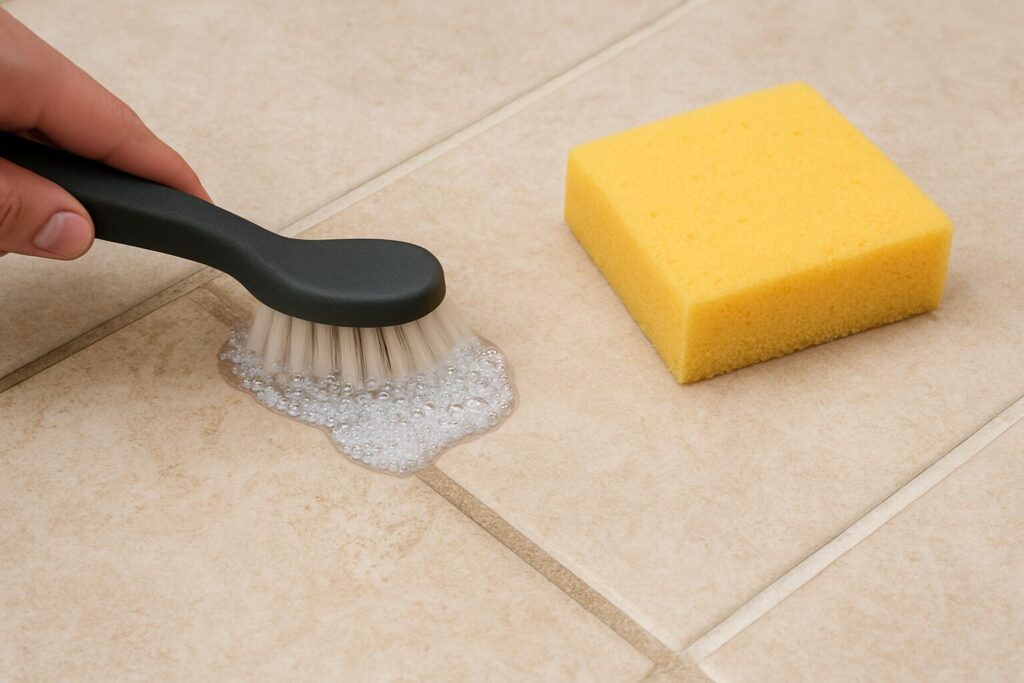
Warm water + a drop of dish soap
A pH-neutral tile cleaner
A baking soda paste (baking soda + water)
Avoid vinegar unless you have sealed grout. Unsealed grout can be etched by acidic products.
How to Apply
Spray or apply the cleaner directly to grout lines.
Let it sit 3–5 minutes to loosen dirt.
Scrub gently with a nylon grout brush (not metal).
2. For Tough Stains: Use Oxygenated Cleaners
If mild cleaners didn’t do the job, move up to oxygen bleach (like OxiClean or a tile-safe equivalent).
How to Use Oxygen Bleach
Mix according to the product instructions.
Apply and let it sit 10–15 minutes — this gives the oxygen time to lift stains.
Scrub grout lines again.
Rinse thoroughly with clean water.
Oxygen bleach is safe for most tile and grout, and it works exceptionally well for soap scum, organic stains, and general discoloration.
3. For Mold or Mildew: Use a Tile-Safe Mold Cleaner
Bathroom grout often traps moisture and can develop mildew.
Use:
A tile-safe mold remover
Hydrogen peroxide
A peroxide-based grout cleaner
Avoid chlorine bleach long-term, as regular use can weaken grout over time.
4. Rinse Well and Dry the Surface
Residual cleaner can attract dirt if left behind.
Rinse with warm water and dry with:
A microfiber towel (best)
A clean mop
Drying helps prevent future mildew growth.
Should You Use a Steam Cleaner?
Steam cleaning is an excellent option if your grout is in good condition. High-heat steam loosens dirt and sanitizes grout without chemicals.
Do not use a steam cleaner if:
Your grout is cracked
Your grout is loose
You have unsealed or epoxy grout that may react to heat
When Cleaning Isn’t Enough
Sometimes cleaning isn’t the issue — the grout is simply worn out.
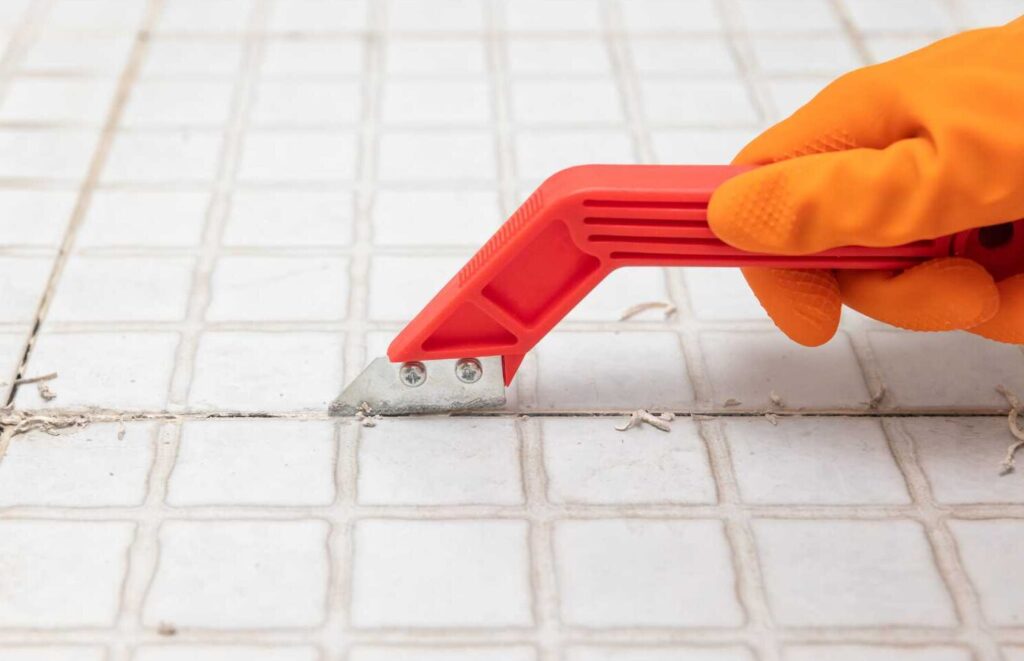
Consider grout repair or regrouting if you notice:
Cracked grout
Missing grout
Powdery, crumbling joints
Deep, permanent stains
Cleaning or regrouting won’t fix structural grout problems. If you can see movement in your tiles, you will have to repair the underlying issue. This will most likely mean pulling up some tile and assessing the tile bond and substrate.
How to Prevent Grout From Getting Dirty Again
Once your grout is clean, protect it.
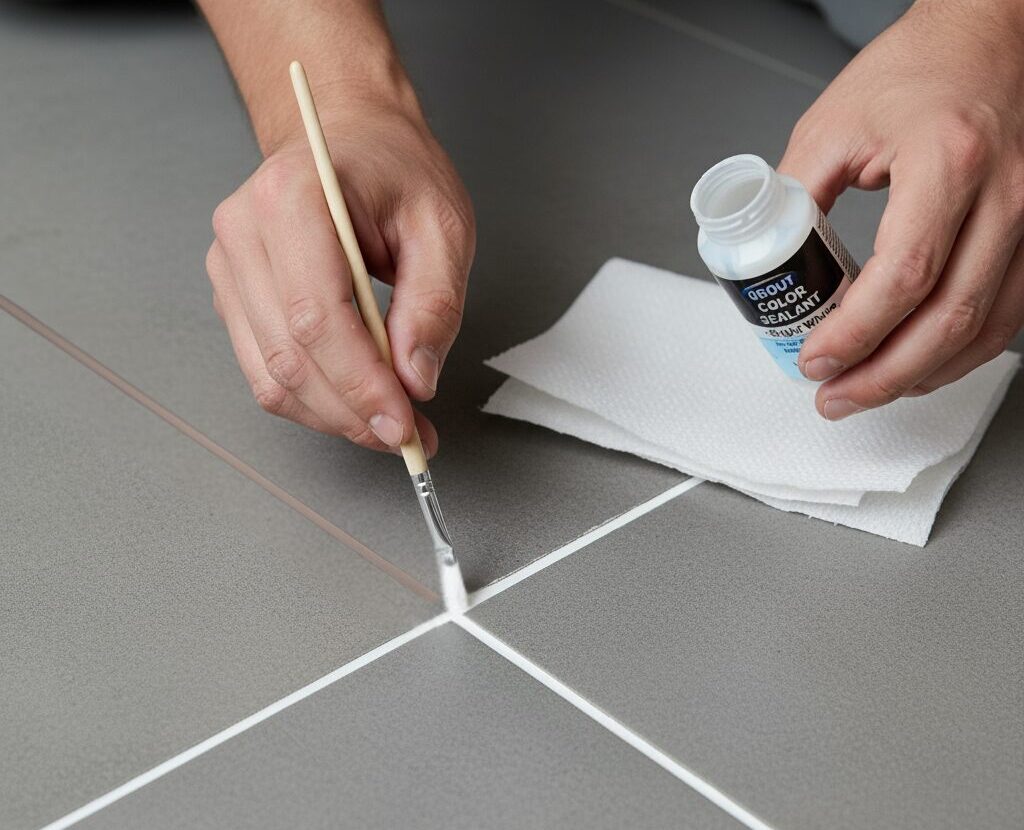
1. Seal Your Grout
A good grout sealer helps:
Block stains
Reduce moisture absorption
Make future cleaning easier
Most grout should be sealed once per year.
2. Use the Right Cleaner Weekly
pH-neutral cleaner = no damage + clean grout
3. Keep Floors and Showers Dry
A quick towel wipe or squeegee prevents soap scum and mildew