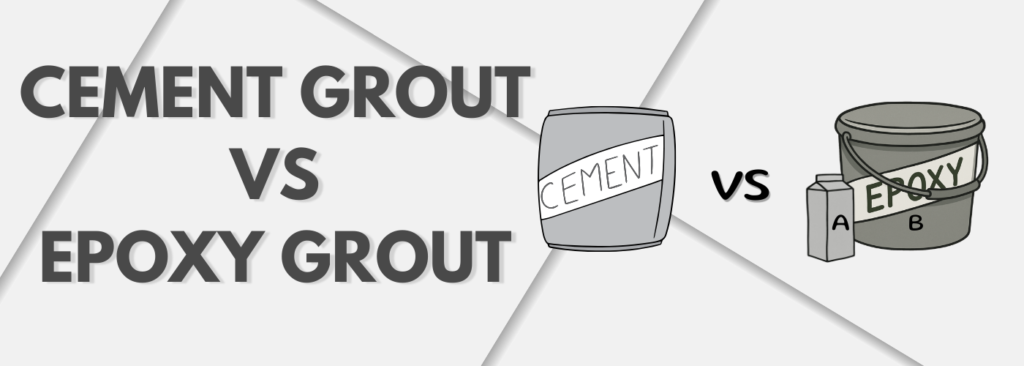
Epoxy Grout vs. Cement Grout
Reading Time: 8 min read
In This Article
-
- TL;DR: The Quick Verdict
-
- What Exactly is Epoxy Grout?
-
- Epoxy vs. Cement: 4 Key Differences
-
- When Should You Choose Epoxy?
-
- The “Hidden” Challenges of Installation
-
- Final Thoughts: Is the Investment Worth It?
TL;DR: The Quick Verdict
Updating your home with new tile is a major investment. Choosing the wrong grout can lead to mold, staining, and costly repairs down the road.
-
- Choose Epoxy Grout for continously wet areas (pools), kitchens, and high-traffic floors. It’s waterproof, stain-proof, and durable.
-
- Stick to Cement Grout for most home projects where ease of application is the priority. Modern grout is much better than it used to be and can hold up well under household traffic.
Most homeowners focus entirely on the tile. They spend weeks picking the perfect marble or ceramic, but they treat the grout as an afterthought. This is a mistake.
At GroutGuide we’ve seen how the right materials can transform a space from a maintenance nightmare into a long-lasting sanctuary. If you want to avoid scrubbing your floors with a toothbrush every Sunday, you need to understand the difference between epoxy and traditional cement grout.
Why Should You Care About Grout?
Traditional cement grout is porous. Think of it like a hard sponge—it absorbs water, spills, and bacteria. Over time, this can (if not maintained) lead to discoloration and mold. Epoxy grout changes the game by using a chemical reaction to create a surface that is virtually indestructible.
Epoxy vs. Cement: 4 Key Differences
1. Durability and Strength
Cement grout is prone to cracking as a house settles. Epoxy grout, made from resins and a hardener, is flexible enough to handle slight movements and strong enough to resist chipping for decades.
2. Water and Stain Resistance
This is where epoxy shines. Because it is non-porous:
-
- Wine, coffee, and grease wipe right off.
-
- Water cannot penetrate it, preventing mold growth behind your tiles.
-
- No sealing required. Cement grout needs to be resealed every year; epoxy never does.
3. Ease of Application
Fair Warning: Epoxy grout is not for the faint of heart. Unlike cement grout, which you can take your time with, epoxy has a “pot life.” Once you mix the two parts, you have about 30–45 minutes to apply it before it hardens into plastic.
4. Cost Comparison
Epoxy grout is roughly 3x to 5x more expensive than cement grout. However, when you factor in the cost of regular sealing and the time spent cleaning over 10 years, epoxy can end up being the cheaper long-term solution.
Pro Tip: If you’re using porous tiles like natural stone or unglazed ceramic, be careful! Epoxy can stain the face of the tile if it isn’t pre-sealed.
The “Hidden” Challenges of Installation
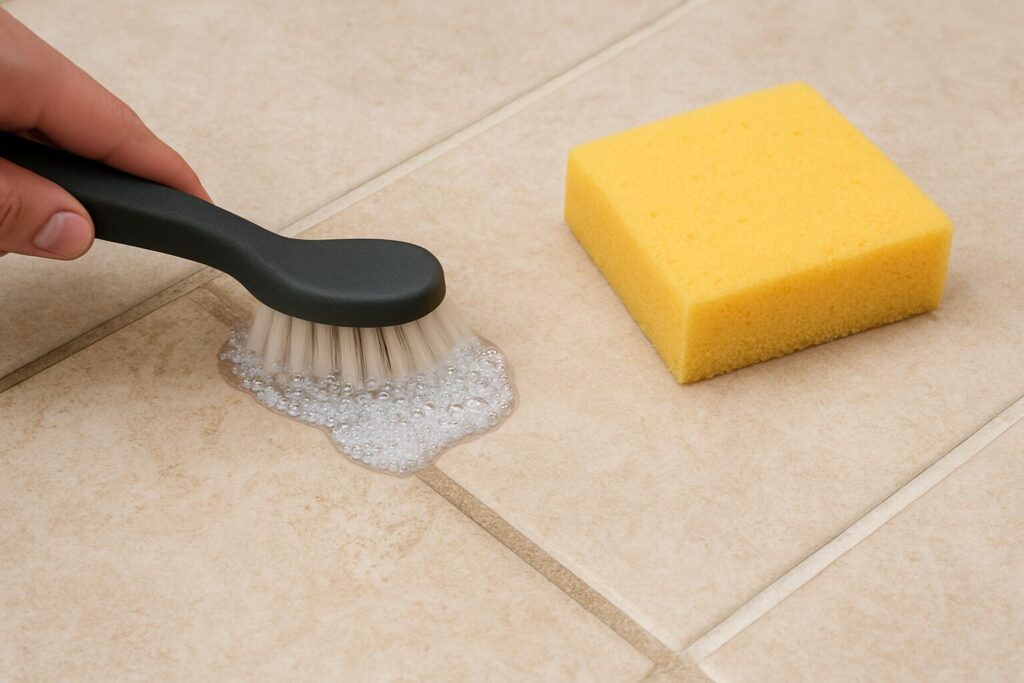
We always tell our clients: Don’t DIY epoxy unless you’ve done it before. If you leave a “haze” of epoxy on the tile surface and it dries, it requires industrial-strength chemicals to remove. You must use a specific epoxy sponge and a two-bucket cleaning system to get a professional finish.
Final Thoughts: Is the Investment Worth It?
Refreshing your home is about more than just looks—it’s about ROI and longevity. Using epoxy grout is a “set it and forget it” strategy. It protects your install, keeps your home looking cleaner, and ensures your tiles look brand new years from now.