How to Mix Grout: The Pro-Grade Guide for Perfect Results
Mixing grout isn’t just about combining powder and water; it’s a critical step that determines the strength, color consistency, and longevity of your entire tile installation. Whether you’re a first-timer or a seasoned tiler, mastering the right technique ensures a durable, beautiful finish.
Follow this guide to get that perfect, workable consistency every time.
1. Gear Up: What You’ll Need
The right tools make all the difference, speeding up your process and improving your results.
-
Grout Choice:
-
Sanded: For wider joints 1/8 inch and wider).
-
Unsanded: For narrow joints (less than 1/8 inch).
-
Modern Grouts like Mapei Ultra color can be used in small and larger grout lines.
-
-
The Liquid: Clean, cool, potable water is the standard. Using cool water helps slow the chemical reaction, giving you a slightly longer working time.
-
Vessels: A clean, 5-gallon bucket. 🚫 Important: Cleanliness is essential! Residue from old materials can ruin your new grout color.
-
The Best Mixer: A low-speed drill (around 300 RPM) with a grout-mixing paddle. This ensures a uniform, lump-free mix without incorporating excessive air.
-
Alternative Mixer: A margin trowel for very small batches.
-
Safety: Always wear gloves and safety glasses.
2. The Initial Blend: Achieving the Right Ratio
Always read the bag first! The manufacturer’s instructions provide the chemically correct ratio for that specific product.
-
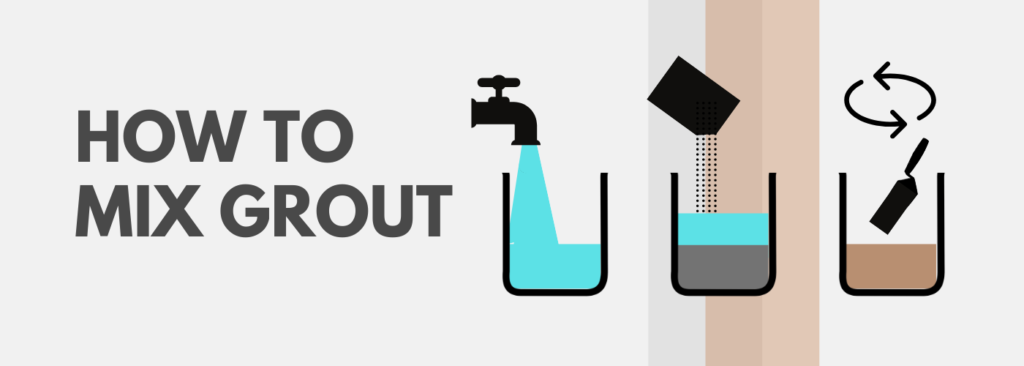
Measure and Pour Powder: Add the desired amount of grout powder to your clean bucket. Pro Tip: Only mix what you can use in the next 30–60 minutes.
-
Hold Back the Water: Add only about 3/4 of the required water (or liquid) to the bucket. Remember, it’s easier to add liquid than it is to correct a runny mix.
-
Mix Slowly and Thoroughly: Begin mixing with your low-speed drill. Keep the speed under 300 RPM to avoid “whipping” air into the mix. Air pockets weaken the final cured grout.
-
Scrape and Combine: Frequently scrape the sides and bottom of the bucket with your trowel to ensure every bit of dry powder is fully incorporated.
-
Target Consistency: The ideal mix is the consistency of creamy peanut butter. It should be thick and stiff, holding its shape on the trowel without slumping or dripping.
-
Adjust: If it’s too crumbly, add the remaining water a bit at a time. If it’s too soupy, add small, controlled amounts of dry grout powder to stiffen it up.
3. Slake Time: The Mandatory Rest
This step is non-negotiable for strong, color-consistent grout.
The Wait: Let the freshly mixed grout rest undisturbed for 5 to 10 minutes (check your bag for the exact time). This is known as Slaking.
-
Why Slake? This resting period allows all the cement and polymers in the powder to fully absorb the water (hydration). Skipping this step results in a weaker, less workable grout that can shrink, powder, and crack.
4. The Final Activation: Remix and Apply
Never add more water after the slaking period!
-
Final Remix: After the slaking time, the grout will feel noticeably stiffer. Briefly remix it for about 1 minute to return it to a smooth, creamy, workable state. This final mixing activates the grout for application.
-
The Working Window: Your grout is now ready. Start applying it immediately, as you typically have only 30 to 60 minutes before the chemical reaction makes it too hard to work with.
-
If it Stiffens: If the batch becomes too stiff during application, do not add more water (this is called “re-tempering” and it severely weakens the cured grout). Simply discard that batch and mix a fresh one.
Mastering this process guarantees you’ll achieve the professional-grade bond and beautiful appearance your tile installation deserves!