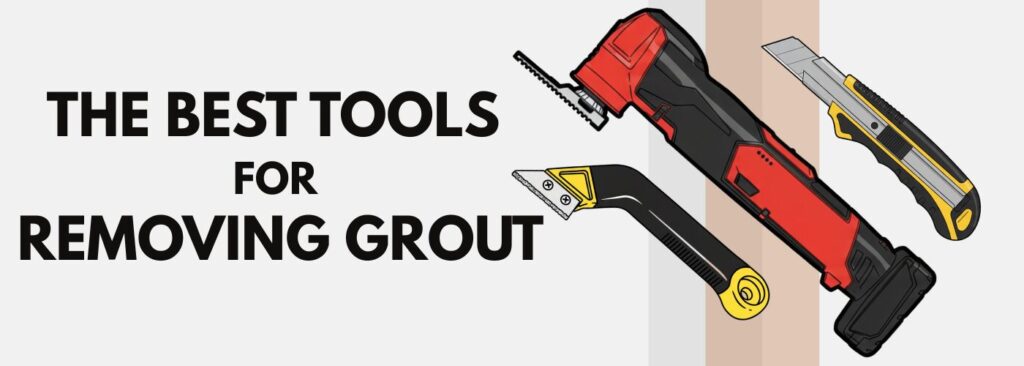
Removing grout is one of those DIY jobs that looks intimidating but becomes manageable once you use the right tool. Whether you’re repairing a few problem spots or replacing grout across an entire room, choosing the right tool will save time, protect your tiles, and give you a cleaner finished surface.
Below is a breakdown of the most reliable grout-removal tools, how efficient they are, what drawbacks to expect, and simple step-by-step guidance for using each one. And as always, the humble utility knife remains our top pick for most homeowners because of its unbeatable accuracy, low cost, and gentle feel on tile edges.
1. Utility Knife (Our Favorite Option)
A standard utility knife is surprisingly effective for grout removal. When used correctly, it gives unmatched control, making it the safest option for avoiding tile chips or scratches.
Why It’s Great
-
Extremely accurate—easy to follow the grout line
-
Very gentle on tile when used at a shallow angle
-
Cheap, replaceable blades
-
Works well for corners, tight joints, and touch-ups
Drawbacks
-
Not ideal for removing grout over large floor areas
-
Requires multiple blade changes during a job
How to Use It (Accurate Method)
-
Install a fresh blade; a sharp edge is essential.
-
Hold the knife at a shallow angle and lightly score the grout line.
-
Make several light passes instead of forcing a deep cut.
-
Once the line opens up, run the tip along it to lift loose grout.
-
Swap blades as soon as they dull—they dull fast when cutting grout.
-
Vacuum or brush away dust so you can track your progress.
Best For: Small to medium grout removal, shower walls, backsplashes, and delicate tile installations.
2. Grout Saw (Manual Abrasive Tool)
A grout saw uses a small abrasive blade—usually tungsten-carbide coated—to file away grout by hand. It’s more aggressive than a utility knife but still fully manual.
Efficiency
Moderate. A good choice for areas with cracked or weakened grout.
Pros
-
Removes grout faster than a utility knife
-
Works extremely well on slightly wider grout joints
-
No power source needed
Drawbacks
-
Can scratch tile if tilted or pressed too hard
-
Requires physical effort
-
Not ideal for narrow joints or tile with fragile glazing
How to Use It
-
Insert the abrasive edge into the grout joint.
-
Use short, back-and-forth strokes while keeping the blade centered.
-
Apply steady, moderate pressure—let the abrasive coating do the cutting.
-
Frequently clear dust so you can see the depth you’re achieving.
-
Slow down as you near tile edges.
Best For: Medium-width grout lines and older grout that breaks apart more easily.
3. Oscillating Multi-Tool with a Grout Blade
An oscillating tool with a carbide or diamond-grit blade is one of the fastest methods for removing grout. It vibrates rather than spins, giving more control than a rotary tool.
Efficiency
High. Excellent for large jobs or tough, deep grout.
Pros
-
Very fast on full regrout projects
-
Great at clearing grout all the way to the bottom of the joint
-
Effective on hard, sanded grout
Drawbacks
-
Higher risk of nicking or chipping tile
-
Loud and dusty
-
Higher initial cost (tool + specialty blades)
-
Not ideal for detailed repair work
How to Use It
-
Install a grout-specific oscillating blade (carbide or diamond).
-
Set the speed to low or medium—control matters more than power.
-
Hold the tool flat against the joint and guide it slowly.
-
Move steadily; avoid pushing the blade into the tile edge.
-
Clear dust often so the blade doesn’t bind.
-
Switch to a manual tool for corners and tight spaces.
Best For: Full flooring or large area grout removal.
4. Rotary Tool (Dremel-Style) with Grout Bits
A rotary tool uses high RPMs to grind away grout. It’s effective but requires practice because it can wander if not controlled carefully.
Efficiency
High—but only when used by someone with a steady hand.
Pros
-
Effective on deep, stubborn grout
-
Good for focused removal in small areas
-
Multiple bit styles available
Drawbacks
-
Easy to slip into tile if the bit “catches”
-
Bits wear down quickly
-
Produces significant dust
-
Requires tight control to avoid uneven cuts
How to Use It
-
Install a grout-specific bit and tighten it firmly.
-
Hold the tool with both hands for stability.
-
Let the RPMs do the cutting—don’t push forward aggressively.
-
Move slowly and follow the grout line carefully.
-
Keep the tool level to avoid gouging tile edges.
-
Vacuum repeatedly to maintain visibility and prevent binding.
Best For: Small sections of stubborn grout, but better suited to experienced DIYers.
5. Carbide Grout Removal Tool (Manual Scraper)
This tool features a small carbide tip or edge designed to scrape through hard grout. It’s simple and inexpensive, but much tougher than a utility knife.
Efficiency
Moderate. Particularly effective on old, dense, or sanded grout.
Pros
-
Very strong cutting ability
-
Carbide edge lasts much longer than standard abrasive blades
-
Good control compared to power tools
-
Budget-friendly
Drawbacks
-
Can scratch tile if used at the wrong angle
-
Hard on the hands during long sessions
-
Less precise than a utility knife in tight areas
How to Use It
-
Hold the tool at a shallow angle inside the joint.
-
Push or pull the carbide tip along the grout line with controlled strokes.
-
Keep pressure light—carbide bites aggressively.
-
Regularly stop to clean dust and monitor depth.
-
Slow down near edges and switch to a utility knife for fine detail.
Best For: Tough or sanded grout where softer tools struggle.
Which Tool Should You Choose?
Power tools are fast, but they also carry more risk—and once a tile edge chips, there’s no easy fix. For most homeowners working in showers, backsplashes, or small tiled areas, the utility knife offers the best combination of control, safety, affordability, and accuracy.
-
It’s gentle on tile
-
It gives the cleanest control
-
It has cheap, replaceable blades
-
It works for the majority of grout repair situations
If you’re tackling a large floor or extremely hard grout, adding a carbide scraper or oscillating tool makes sense. But for everyday grout removal, the utility knife consistently delivers the best results for the least cost.