What Cleaner Should I Use For Tile?
You walk into the cleaning aisle, and suddenly you’re staring down a wall of bottles. Bleach, ammonia, vinegar, “multi-surface,” “tile-safe”—it’s a confusing mess!
Choosing the wrong cleaner isn’t just inefficient; it can actually damage your grout or etch your beautiful tiles. That’s why we’re here to cut through the marketing jargon and give you the straight talk on what to use when you need to clean your tile.
Here is the Grout Guide breakdown on the three main types of cleaners you need to know about.
1. The Daily Driver: pH-Neutral Cleaners
If you’re cleaning your tile and grout every day, or even a few times a week for light maintenance, you need a pH-neutral tile cleaner.
Why We Love It:
Safety First: These are the safest tile cleaners for all types of grout and tile, especially natural stone like marble, travertine, or limestone (which highly reactive cleaners can ruin).
Gentle Power: They lift dust, oil, and light grease without stripping any sealants you might have applied.
Zero Residue: The good ones won’t leave a hazy film.
When to Use It:
Routine kitchen floor clean-ups.
Daily shower wall maintenance.
Cleaning sealed and unsealed natural stone tiles.
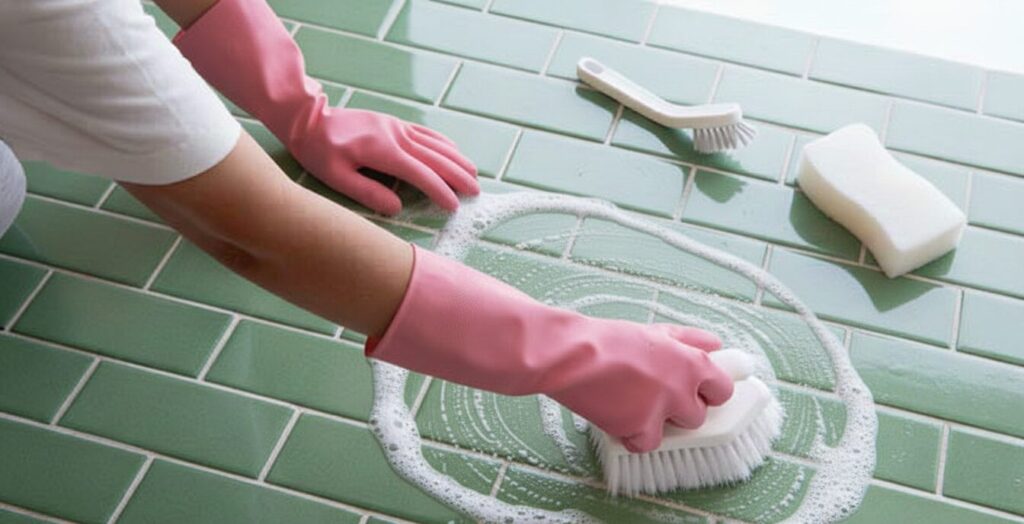
Grout Guide Pro Tip: If you’re washing down a large floor area, make sure you use a clean Sponge and change your rinse water frequently to avoid spreading micro-grime!
2. The Heavy Artillery: Alkaline (High-pH) Cleaners
When you’re dealing with serious grease, oil, and built-up grime, you need to bring in the alkaline cleaners. These are your degreasers.
Why We Love It:
Grease Busters: They are fantastic at cutting through oily residue from cooking, spilled food, or soap scum in the shower.
Deep Cleaning: They penetrate porous surfaces like unsealed ceramic tile and grout to pull out embedded dirt.
When to Use It:
Deep cleaning kitchen floors around the stove.
Removing heavy soap scum from ceramic or porcelain shower walls.
Pre-treating prior to grout sealing.
The Warning:
While great for porcelain tile and ceramic tile, you should generally avoid using highly alkaline cleaners on natural stone. Read the label, and always rinse thoroughly!
3. The Mildew Killer: Acidic (Low-pH) Cleaners
This category is specific, potent, and comes with the biggest warning label. The most common acidic cleaner you already own? Vinegar.
Why We Love It:
Mineral Attack: These cleaners are the absolute best at dissolving mineral deposits, rust, hard water stains, and efflorescence (that chalky white powder).
Mildew Fighter: They can kill mildew and break down serious bathroom build-up.
When to Use It:
Removing heavy calcium or lime scale from a tiled shower floor.
Tackling tough grout mildew that won’t budge.
The Major Warning:
NEVER use vinegar or strong acidic cleaners on natural stone (marble, travertine, etc.). The acid will permanently etch and dull the surface.1 For standard ceramic and porcelain, use sparingly, and never mix them with bleach—that creates toxic chlorine gas.
The Grout Guide Summary
| Problem | Tile Type | Best Cleaner Type | Our Go-To Tool |
| Everyday Grime | All Tiles (Stone, Porcelain, Ceramic) | pH-Neutral | Grout Sponge |
| Kitchen Grease/Soap Scum | Ceramic, Porcelain | Alkaline/Degreaser | Drill Brush (See our guide!) |
| Hard Water Stains/Mildew | Ceramic, Porcelain | Mildly Acidic (Diluted) | Stiff Nylon Brush |
Stop overthinking it! Pick the right chemical weapon for the job, use a quality sponge and bucket, and you’ll keep your tile and grout looking fantastic for years.
Need to tackle a massive grime build-up first? Check out our posts on how to steam clean grout or using a drill brush for grout cleaning to get a clean slate before switching to a daily maintenance plan.